Showing posts with label Skoda. Show all posts

Skoda Octavia

Skoda Octavia is a compact car produced by the Czech car manufacturer Škoda Auto since 1996, its name is taken from a model originally produced between 1959 and 1971. The current Octavia is available in five-door liftback and estate. Car based on VW Group platform to share the Volkswagen Golf. There have been two generations of models of the Octavia. high-performance version of the VRS or the RS, which is related to the Volkswagen Golf GTI will be available.


The first generation Octavia was published in 1996 and was built in the Volkswagen Group A4 (PQ34) platform. UK sales commenced in 1998 and the big car was an instant hit with buyers who appreciated its power, refinement and economy, but could not match the success of established family favorites as the Ford Mondeo car and Opel Vectra. The car has been widely used in the taxi trade in the UK due to the large number of private hire drivers who use the vehicle because of its low price space, and reliability.


The first generation Octavia gets a makeover in 2000 and is still manufactured and marketed in some markets, although the second generation was introduced in 2004. In Germany and other parts of Western Europe and Asia, older model is marketed under the Octavia Tour, while the new model is marketed as the Octavia. In some markets, is the first generation Octavia is still known as Octavia, and the new model called the new Octavia, Octavia5 (Greece) or Laura (India). The main improvements of the new model is the independent rear suspension and interior improvements (in space, design and quality of materials).

The original version also presents Octavia 4x4 wheels, both for goods and most popular sedan models, and uses the Haldex clutch drive as other cars based Volkswagen Group A platform (Golf IV, Audi A3 Seat Leon Cupra and R4). His ground clearance and a larger tank of fuel for transport 63 liters (17 U.S. gal; imp 14) with respect to L 55 (15 U.S. gal; imp 12) Standard FWD versions. The option was available for 4x4 1.8T 150 bhp (112 kW, 152 hp) gasoline engine, the 1.9 TDI 90 hp (67 kW, 91 hp) diesel engine, along with a 5-speed manual and 1.9-TDI PD (Pumpe-Duse) 100 hp (75 kW, 101 hp) diesel engine version that comes with six-speed manual transmission.


The speed manual model other 6 was the 1.9 TDI-PD 131 hp (98 kW, 133 hp) available with the front wheels. Only the VRS, which is the highest specification and faster, is a turbocharged 1.8-liter I4 that produces 180 hp (134 kW, 182 HP), as the first engine in the Audi TT. Skoda has a limited number of WRC Replica 100 cars worldwide in 2002, are distinguished from normal Octavia VRS, because they are produced in white, have rally decals and other standard accessories (such as ESP, fog xenon, heated front seats). The VRS model was also popular with British police as both a car off the road and style without dialing (Q-bus), due to its low cost, reliability, performance, and simple.

SEAT León

The SEAT León (Spanish pronunciation: [León]) is a C-segment car built by the Spanish car manufacturer and a subsidiary of Volkswagen Group SEAT, SA since October 1998 versions. Leon or two generations have built on two different Volkswagen Group A platform, and also share many components with the Volkswagen Golf, Volkswagen Jetta, Audi TT, Audi A3 and Skoda Octavia.


Original Seat Leon (group Volkswagen Typ 1M), which was launched in 1999, was a sedan version of the SEAT Toledo. It is based on the Volkswagen A4 (PQ34) platform, and as such, many of the common parts of other VW Group models, such as the Volkswagen Golf Mk4, Bora and Audi A3. Since the first SEAT model of the C segment, as part of the VW Group Leon Mk1 version was marketed in more sports and less expensive than the Golf. Reinforcing the sporting image, the car was a bit the most aggressive. The more expensive versions were equipped with an efficient internal combustion engine, as well as a firmer suspension for better handling. Inside, the dashboard had been received that the first generation of Audi A3.


The available engines are 1.4 liter 16-valve petrol that produces 55 kW-DIN-rated (75 hp, 74 hp), an 8-valve 1.6-liter gasoline 74 kw (101 hp, 99 hp) (quickly replaced by a valve 16 77 kilowatts (105 horsepower, 103 horsepower) of the unit), and two variants of the engine valve 20 Volkswagen Group 1.8-liter turbo (with some countries also get the 2.8-liter VR6 providing 150 kW (204 hp, 201 hp). The original Leon Cupra (which later became known 'Cupra T') had a 1.8-liter turbo with 132 kW (179 PS, 177 hp), and the Lion Cupra R 154 kW (209 PS, 207 hp), later becoming 165 kW (224 PS, 221 hp).

In some countries, there was a 'Cupra 4', equipped with a 2.8 liter VR6 provide 150 kilowatts (204 hp, 201 hp) equipped with four-wheel drive, based on the same drive Haldex multi-plate as the Volkswagen Golf. 4Motion. A series of turbocharged direct injection) diesel engines (TDI is available, including 110 kW (150 hp, 148 hp) version of the Volkswagen Group 1.9 TDI engine, originally sold as a 'Cupra 4' instruments TDI, 4 wheel drive, which sold for only one year, and only in some countries, then sent to 'Evolution' series and 'Best Sports' and later renamed as 'RF' (Formula Racing .) small diesel versions are available with 66 kW (90 hp, 89 hp) 81 kW (110 hp, 109 hp) and 96 kW (131 hp, 129 hp) output.


All motors over 96 kW (131 PS, 129 hp) has a six-speed manual transmission. The rear suspension was a torsion beam for most variants, while the top models are equipped with a multi-link independent rear suspension. All versions have disc brakes on all four wheels (ventilated front, behind and in some cars too). In Mexico, Leon is a car very popular with young upper class. The only problem suffered Leon in Mexico is the fact that the sport suspension of Leon is not designed to withstand the constant road imperfections like potholes and speed bumps, there are many roads Mexican .

Switzerland was the official version, according to the fine-tuned by Abt Sportsline, and Leon, called The 'SEAT Leon Cupra 4 Kompressor'. This version was the same 2.8-liter 4WD, and VR6, but the 206 kW (280 hp, 276 hp) and 323 newton meters (238 ft · lbf) of torque. Typ 1M factory production ended in May 2006. however, appreciate the SEAT Leon Cupra complaint R Mk1 was clearly yet, although sedan hottest of all time survey conducted in 2010, the British magazine Autocar, where his players to respect the list seventh R Cupra's top ten sedans of all time and their preferences.

Saab Aero-x

Saab Aero-X Saab Concept is presented at the International Motor Show 2006. It is powered by a 2.8 L V6 bi-turbo running on pure ethanol that produces 300 kW (400 hp). 0 to 100 km / h (62 mph) in 4.9 s is expected to speed  and the top is limited to 250 kmh (155 mph). It has a 7-speed manual transmission is controlled by paddle shifters.

Like the Saab Turbo X, the Aero X is a four-wheeled vehicle. The doors and windscreen are connected, so instead of conventional doors or even gullwing doors, it uses a cockpit canopy where the entire top of the car open. This offer driver Aero X is a complete 180 degree vision, and also facilitates entry and exit from its low cabin. The frame is carbon fiber. The suspension is electronically controlled. Although it is a small two-seater sports car, it is reasonable space behind the two storage facilities, a traditional hatchback and sliding drawer underneath.

Scandinavian interior offers a clean interior. The machine is not a normal call and buttons, but the information is displayed with acrylic 'clear zones' in 3D graphics and images. All interior and lights to use LED. Although only a concept car, was well received, and many fans we demand their production. SaabsUnited Victor Muller replied. com website saying it is not a priority at this time for the company. The study shows the strength of the Saab brand in the election can inspire bold, innovative design, said Bryan Nesbitt, Vice President of GM Design Europe. In the near future, the new Saab products, we will remain focused on carefully cultivating this brand equity within the context of Scandinavian design values.

This concept shows the exciting possibilities available to us as we develop a design language of the most progressive of the Saab brand, says Jan Åke Jonsson, CEO of Saab. Our designers, engineers and marketers in Sweden are ideally placed to nurture and communicate the unique DNA Saab brand. Their work will ensure that future product proposals express core qualities, progressive design, sporty performance and emotional functionality, in a manner that is specific to Saab. Elements of the design of car front has emerged in recent Saab models, including the updated design of the Saab 9-3 Sport Sedan, the second generation Saab 9-5 and the upcoming Saab 9-4X.

Saab Aero-x More Photos:

Rover 400 / 45

Rover 400 (later the Rover 45) is a series of tourism, truck, and (later) five-door models, produced by the British manufacturer Rover from 1990 to 2005. The car has been jointly developed in collaboration with Honda, Rover, the two generations of the car were calculated from the redesigned Honda chassis, the first Honda Concerto and later, the Honda Civic.


The original 400 series, released as a four-door sedan in early 1990, it was only a sedan version of the sedan in the second generation Rover 200 series, both share the code name during development of the R8. Like the 200, the model was designed in collaboration with Honda (who produced the corresponding model designed for the Concert of Europe) and the two models that share production lines at Rover plant at Longbridge. He used the same basic structure and mechanics as the Honda, but the new design of the rear caliper and body are unique to Rover. Architecture Interior trim and electrical systems were shared with all the 'R8' Rover 200.

A succession - or break - version was later developed by Rover Special Products. Badged as the Rover 400 Tourer, it remains in production since the second generation of 400 to 1998, because no station wagon version of the car were built later. R8 Rover 200 and 400 are the first applications of the family Rover K-series engines (listed in 1.4 L (1396 cc) twin cam 16-valve form). The 1.6 liter (1590 cc) version used, a Honda D16A8 D16A6 SOHC or DOHC power supply, while the 2.0 L M-Series 800-unit series soon followed (1991) in versions sports. engine models Rover drove the front wheels through jointly developed gearbox Peugeot / Rover R65 (1.4 liters) and an integrated license PG1s Honda designed at 1.6 and 2.0 liter versions.

Also available are two diesel engines of PSA, with the choice of aspirated 1.9-liter turbo or 1.8 XUD7T XUD9 engines. They settled in the place of Perkins Prima used in the Austin Maestro and Montego because the combustion engine with its heavy was too thick for new models. A facelift midlife (also applies to the Rover 200) saw the reintroduction of the Rover grille has also reappeared in the remodeling of the Rover R17 800. This change was accomplished without significant alteration of the remaining structure, but always a 'family' more distinctive Rover and establish some distance from the Honda Concerto.

Rolls-Royce Ghost

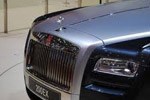
Rolls-Royce is a luxury sedan Rolls-Royce Motor Cars. The (ghost) label, the name in honor of the Silver Ghost, the first car produced in 1906, was announced in April 2009 at the Shanghai Motor Show. During development, the ghost was known as the (RR04). Designed as a little (more measured, realistic cars) that the ghost with a view to a category of lower prices for Rolls-Royce models, the selling price is 170,000 pounds ($ 255,000 USA). The production model was officially unveiled at the Frankfurt Motor Show 2009.

The original concept car, the 200EX name was officially unveiled in Geneva in March 2009, which indicates the direction of Ghost-style production model. Unlike the aluminum-bodied Phantom, the 200EX is steel, which has a higher tensile strength and therefore can be thinner. The chassis uses a smart suspension system on all fronts of air and aluminum and multilink rear axle. Systems such as Active Roll Stabilization, four corner air springs and variable damping function as a single control, so imperceptible to the driver and passengers to provide the best possible comfort for the occupants. Connected to the mainframe, the suspension is capable of detecting the movement of one side of a back seat to another, and compensates accordingly.


The Ghost was designed by Ian Cameron and directed by Helmut Riedl, who led the development of more than Rolls-Royce Phantom. Ghost, codenamed RR04 during its design phase, was designed to compete with vehicles far less expensive than the Phantom, as the Bentley Continental Flying Spur.

The Holy See borrows 20% of their parts for the BMW E01 platform, which underpins the current BMW 7 Series. The Phantom has a 129.7-inch (3290 mm) wheelbase, roof height, bonnet height and track gauge of their own, and the Holy uses air springs ghost style. The car also shares the FlexRay system electronics. BMW supplied parts are used in places without being seen by the driver functional. The car weighs 5,445 pounds (2,470 kilograms) on the sidewalk.

The engine is a 6.6 liter V12 twin-turbo engine with variable valve timing, rated 563 horsepower (420 kW) produce 780 newton-meters (580 ft • lbf) of torque, automatic transmission ZF 8-speed.The engine allows the Ghost to accelerate from 0-60 mph (97 km / h) in 4.7 seconds and reaches an electronically limited top speed of 155 mph (249 kmh).